
Tech
Console hardware targets, Rockstar’s next-gen RAGE engine, and an architectural PC breakdown for Grand Theft Auto VI.
Grand Theft Auto VI marks Rockstar Games’ first release built exclusively for ninth-generation hardware and beyond. By bypassing legacy PS4 and Xbox One architectures entirely, the development team has eliminated past memory bottlenecks—leveraging multi-threaded Zen 2 processing, hardware-accelerated ray tracing, and ultra-fast NVMe SSD streaming to render the state of Leonida without generational compromises.
Launch Hardware
Confirmed Platforms & Performance Targets
Rockstar has officially confirmed PlayStation 5 and Xbox Series X|S as launch platforms. Here is how each console architecture lines up against the demands of Vice City.
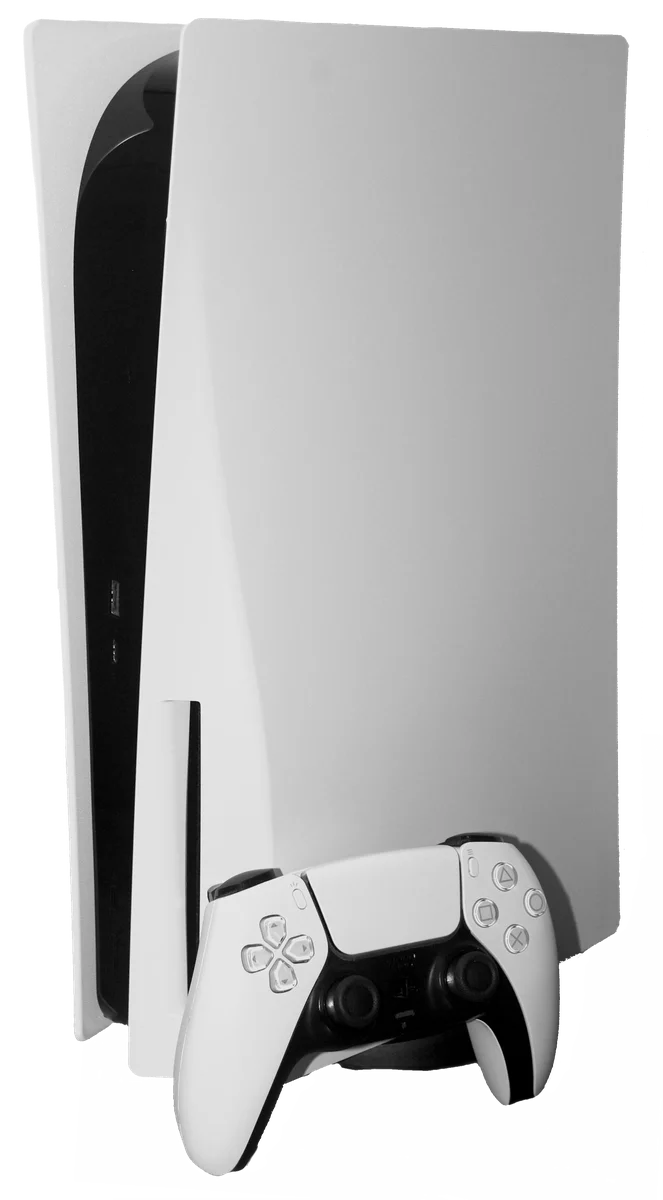
PlayStation 5
Target Performance
Dynamic 1440p (Upscaled 4K) • 30 FPS
- CPU
- 8-Core AMD Zen 2 @ 3.5 GHz
- GPU
- 10.28 TFLOPs RDNA 2 (36 CUs)
- Memory
- 16 GB GDDR6 (448 GB/s)
- Storage
- 5.5 GB/s Raw NVMe SSD
Leverages Sony’s custom I/O controller for zero-friction asset streaming across Vice City. Deeply integrated with DualSense adaptive triggers and localized haptic feedback.
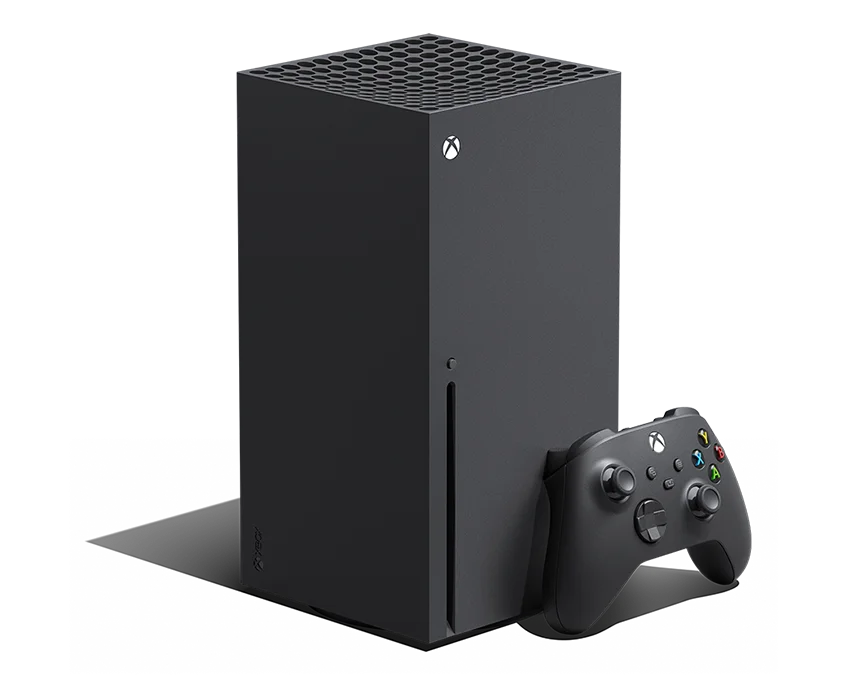
Xbox Series X
Target Performance
Dynamic 1440p–1800p (Upscaled 4K) • 30 FPS
- CPU
- 8-Core AMD Zen 2 @ 3.8 GHz
- GPU
- 12.15 TFLOPs RDNA 2 (52 CUs)
- Memory
- 16 GB GDDR6 (560 / 336 GB/s)
- Storage
- 2.4 GB/s Raw NVMe SSD
Features the highest raw compute density among base consoles. 52 compute units ensure high internal pixel resolve and stable ray-traced lighting passes during high-speed traffic.
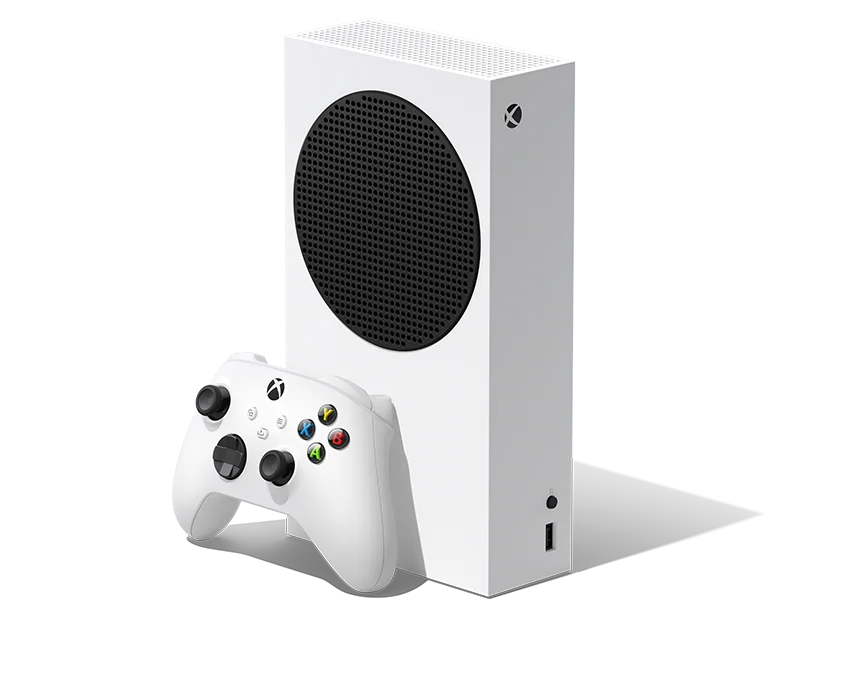
Xbox Series S
Target Performance
Dynamic 1080p • 30 FPS
- CPU
- 8-Core AMD Zen 2 @ 3.6 GHz
- GPU
- 4.0 TFLOPs RDNA 2 (20 CUs)
- Memory
- 10 GB GDDR6 (224 / 56 GB/s)
- Storage
- 2.4 GB/s Raw NVMe SSD
Shares identical 8-core Zen 2 architecture to preserve complete physics and NPC simulation parity. Resolution scaling and optimized streaming buffers adapt to the 10 GB memory constraint.
PlayStation 5 Pro & PSSR Reconstruction
With 67% additional compute units (16.7 TFLOPs), up to 3x faster hardware ray tracing throughput, and Sony’s dedicated PlayStation Spectral Super Resolution (PSSR) AI upscaler, the PS5 Pro is equipped to offer the premier console presentation of GTA VI prior to an eventual PC launch.
Resolves clean 4K reconstruction without temporal TAA motion blur.
Hardware BVH traversal for detailed reflections on coastal water and glass.
28% faster memory bandwidth mitigates dense downtown framerate drops.
While CPU limitations on Zen 2 remain across all ninth-gen platforms, PSSR overhead reduction and expanded GPU headroom position PS5 Pro as the primary candidate for an optional 40 FPS Fidelity preset or unlocked 120Hz VRR output.
Proprietary Technology
Next-Gen RAGE Engine Innovations
Rockstar Advanced Game Engine (RAGE) has undergone its most substantial architectural overhaul to date. These core technical breakthroughs power the living simulation of Leonida.
Ray-Traced Global Illumination (RTGI)
Real-time bounced lighting replaces static pre-baked lightmaps. Neon reflections illuminate wet tropical asphalt, coastal waters, and vehicle interiors with authentic optical accuracy.
High-Throughput NVMe Streaming
Direct-to-GPU virtual texture pipelines eliminate legacy loading pauses. Smooth high-speed transitions connect sprawling ocean causeways to densely populated hotel interiors.
Volumetric Weather & Fluid Dynamics
Full physical simulation for Atlantic storms, hurricane gusts, and tidal surges across the Keys. Ocean swells dynamically interact with vessel buoyancy and shoreline geometry.
Autonomous Crowd & Traffic Simulation
Leveraging all 16 Zen 2 CPU threads to power autonomous pedestrian behaviors, emergency service routing, and lifelike traffic congestion patterns without aggressive despawning.
DualSense Haptic Feedback & Adaptive Triggers
Following implementation patterns established in Grand Theft Auto V on PS5, GTA VI will harness localized voice-coil actuators to convey environmental texture—from torrential rain patter on vehicle roofs to loss of tire traction on unpaved swamp roads. Dynamic trigger tension will distinguish weapon trigger weights and custom brake resistances across vehicle classes.
Full haptic telemetry integration
Platform Roadmap
PC Release Timeline & Baseline Specs
The Staggered Release Tradition: Historically, Rockstar Games prioritizes dedicated home consoles at launch to achieve maximum optimization on closed hardware. A dedicated Windows PC version has reliably followed 12 to 18 months later—as seen with both Grand Theft Auto V (2013 on console, 2015 on PC) and Red Dead Redemption 2 (2018 on console, 2019 on PC).
How the PC Baseline is Calculated: Because GTA VI is natively engineered around 8-core Zen 2 processors and 8GB–10GB GPU memory budgets, the hardware floor required for a fluid 1080p experience on PC can be reliably inferred from the lowest-common-denominator console (Xbox Series S).
Estimated PC System Requirements
Architectural estimate derived from 9th-generation console hardware baselines.
DirectStorage Requirement: An NVMe SSD is technically essential. Mechanical HDDs cannot satisfy the asset bandwidth requirements of Vice City's seamless world streaming.
Hardware Intelligence
Frequently Asked Technical Questions
Evidence-based answers addressing the most common technical questions surrounding GTA VI’s release across consoles and PC.
Will GTA 6 run at 60 FPS on PlayStation 5 and Xbox Series X?
Technical breakdowns and hardware analyses (including Digital Foundry) indicate a 30 FPS target for base PS5 and Xbox Series X consoles. GTA VI’s profound CPU-side demands—including dense crowd AI, vehicular pathfinding, physics interactions, and real-time ray-traced global illumination—push the 3.5–3.8 GHz Zen 2 processors to their limits. While a 40 FPS mode on 120Hz VRR displays remains possible, a locked 60 FPS mode on standard ninth-gen consoles is highly improbable.
What technical advantages will the PS5 Pro offer for GTA 6?
The PlayStation 5 Pro features 67% more GPU compute units, dedicated hardware for ray tracing, and Sony’s proprietary PlayStation Spectral Super Resolution (PSSR) machine learning upscaler. For GTA VI, this architecture is positioned to deliver crisper reconstructed 4K visuals, enhanced ray-traced reflections on water and urban glass, and significantly improved framerate stability in demanding metropolitan scenes.
Could GTA 6 feature a 40 FPS fidelity mode on 120Hz and VRR displays?
Yes, a 40 FPS mode is an ideal candidate for HDMI 2.1 displays supporting 120Hz refresh rates and Variable Refresh Rate (VRR). In frametime mathematics, 40 FPS requires exactly 25.0ms per frame—sitting precisely at the temporal midpoint between 30 FPS (33.3ms) and 60 FPS (16.7ms). This provides a perceptibly smoother 50% increase in motion responsiveness over 30 FPS while preserving the CPU and GPU headroom needed for full ray-traced global illumination and uncompromised NPC density.
How does GTA 6 handle reflections: hardware ray tracing or Screen-Space Reflections (SSR)?
Technical breakdowns of official trailer footage confirmed a unified hybrid lighting pipeline utilizing hardware-accelerated Ray-Traced Reflections and Global Illumination (RTGI) rather than traditional Screen-Space Reflections (SSR). Traditional SSR fails whenever a reflected object leaves the camera’s immediate field of view. In a coastal, neon-lit setting like Vice City, hardware RT allows puddles, vehicle glass, and ocean waters to accurately reflect skyscrapers and light sources located above or behind the camera.
When is Grand Theft Auto VI expected to release on PC?
Rockstar Games has not yet announced a PC release window. Historically, Rockstar optimizes mainline titles for home consoles first before releasing a dedicated PC edition 12 to 18 months later—as demonstrated with Grand Theft Auto V (2013 on consoles, 2015 on PC) and Red Dead Redemption 2 (2018 on consoles, 2019 on PC). An eventual Windows release is widely expected following the console debut.
Can the Xbox Series S handle the full GTA 6 open world?
Yes. Rockstar Games and Take-Two Interactive officially confirmed Xbox Series S from the initial announcement. Because Series S shares the identical 8-core Zen 2 CPU architecture as Series X, core simulation, world density, and gameplay mechanics remain fully intact. Visual adjustments will focus on dynamic rendering resolution (targeting dynamic 1080p), reduced texture streaming caches, and simplified ray-tracing passes to stay within the 10 GB memory pool.
Will GTA 6 require an NVMe SSD on PC and consoles?
Yes, high-speed solid-state storage (NVMe SSD) is mandatory across all platforms. GTA VI streams multi-gigabyte world assets and high-resolution geometry continuously as players traverse Leonida at high speeds. Mechanical hard disk drives (HDDs) do not possess the transfer speeds required to sustain this pipeline and would produce catastrophic asset pop-in and stuttering.